Say why you thought of them today
A good flower card message usually needs three things: a reason for the gift, one detail that belongs to your relationship, and a natural sign-off. For a birthday, wish them something they would enjoy. For a thank-you, name the kindness. For an everyday gift, explain what made you think of them.
You do not need to decode every flower or write a poem. “Thank you for checking in after my interview. It helped to know you remembered” gives the recipient a clear, personal thought. Use the examples below to get started, then change the detail to one that is true for you.
Find a message by recipient and occasion
These 40 original examples fit the maker's 180-character short note before you add names or extra details. Filter to find the right relationship, then copy a line or choose Review in maker. You will review it in Step 3 before it replaces or joins any existing note.
Make a sample sound like you
Start with a line you would be comfortable saying aloud. Replace one generic detail with a shared place, a recent act of kindness, or something the recipient is looking forward to. Remove any phrase that sounds more formal or more intimate than your usual voice.
Before: “Thank you for everything.” After: “Thank you for bringing dinner when I was overwhelmed. Having one less thing to organize helped more than you knew.” The second version explains the gift without asking the recipient to guess.
For a birthday, avoid making the whole note about yourself. For congratulations, recognize the effort rather than predicting a perfect future. For encouragement, offer company without making a reply or a cheerful reaction part of the request.
If you are apologizing, name the behavior and what you will change. A flower card can open that conversation, but it cannot complete it on the recipient's behalf. Avoid a line that makes forgiveness sound like the price of accepting the gift.
Pair the words with a simple visual choice
Choose a design whose mood fits your message, then adjust it to the recipient's taste. The note gives the arrangement its context; a template category does not limit what you can write.
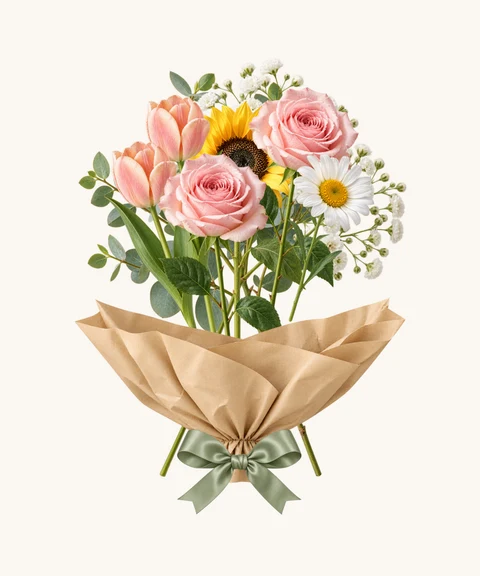
A birthday wish: sunflower and peach
The bright focal flower supports a celebratory greeting. Use the card to name something you hope the person enjoys today.
Make it yours: Swap a flower for their favorite, and keep a longer birthday story in the optional letter.
Customize this design →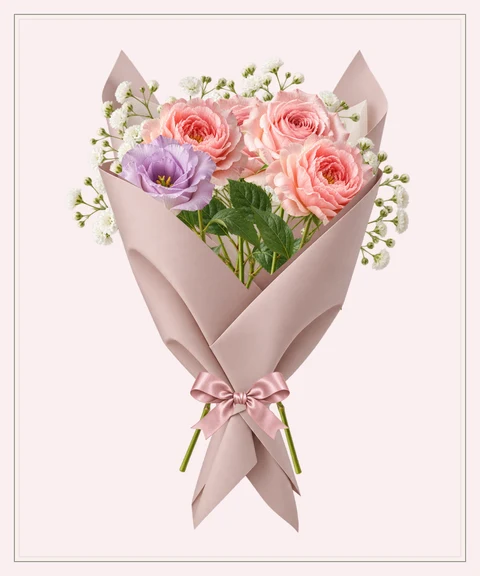
A personal love note: roses and peonies
Soft pink layers are one option for a romantic message. Their favorite colors take priority if they prefer a different palette.
Make it yours: Use a single remembered moment on the card. Add the rest to the letter and share the link.
Customize this design →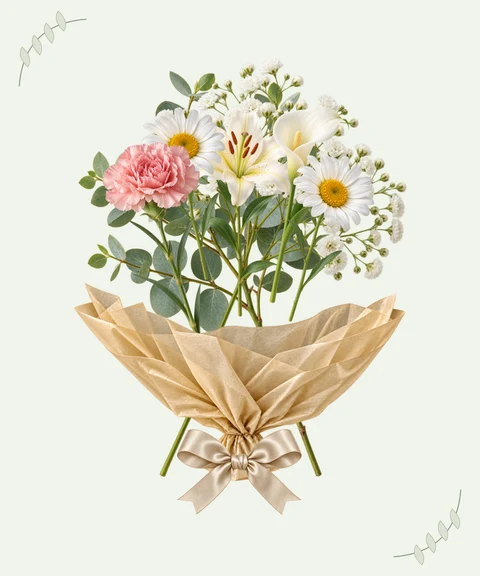
A specific thank-you: a small mixed bouquet
Ivory flowers and daisies leave the message to explain the gesture. A short sentence naming the help is enough.
Make it yours: Choose a PNG with a short card if you want to send the words as an image.
Customize this design →Short note or longer letter?
Use the short note for the thought you want someone to read first. It allows 180 visible characters and up to six line breaks. The To and From fields are separate and allow 40 characters each, so you do not have to squeeze both names into the note.
Use the optional letter for a story, a fuller thank-you or an anniversary memory. It allows up to 6,000 characters and appears in the shared gift after the envelope opens. Keep a copy of a letter you want to retain; gift links expire 30 days after creation.
For a picture, choose Bouquet + short card, Story card or Pinterest card to include the short text. Bouquet only omits it. No PNG contains the full letter or the opening animation: send the gift link or its QR code for that experience.
Read it once as the recipient
Check the name, the occasion and any promise to call or visit. If you use an inside joke, make sure it still reads kindly without your tone of voice. Remove private details if you are sending the gift to a group conversation.
Write in the language you share. Accents, emoji and right-to-left text can be used in the maker, but always inspect the recipient preview and the prepared PNG you intend to send. Different fonts and emoji can render differently across devices.
Preview the envelope before creating the gift link. After publishing, further draft changes are not live until you choose Update live gift. Share the recipient link, not the separate private editing link. If you only need an image, you can prepare and download a PNG without publishing a gift.
Common questions
How long should a flower card message be?
One or two focused sentences are often enough. In this maker, keep the short note within 180 visible characters. Use the separate name fields and put a longer story in the optional letter.
What can I write if there is no special occasion?
Say what prompted the gift: a color that reminded you of them, a memory, or a simple wish to say hello. You do not need to invent a celebration.
Will using a sample overwrite my current message?
No. Review in maker queues the sample for Step 3, where you can replace the note, append it, add it to the letter or cancel. Check the character count after combining text.
Can I leave the card blank?
Yes. Names, the short note and the letter are optional. Choose Bouquet only when downloading if you want an image without card text.
Does the QR code contain the words of my letter?
It contains the recipient link, not the letter itself. Opening that link loads the gift. Anyone with it can read the gift, and it expires on the same date as the link.